

The Gospel According to John PDF: A Comprehensive Guide
Discover readily available PDF versions of the Gospel of John, encompassing translations like the New Jerusalem Bible. Explore resources from Catholic Online,
the Internet Archive, and scholarly commentaries by William Barclay and Brooke Foss Westcott. Access complete texts for in-depth study!
The Gospel of John stands apart within the New Testament, offering a profoundly unique portrayal of Jesus Christ. Unlike the synoptic Gospels (Matthew, Mark, and Luke), John presents a more theological and reflective account, focusing less on detailed narratives of events and more on revealing Jesus’ divine nature and purpose. This distinction makes exploring the Gospel of John in PDF format particularly valuable for serious study.
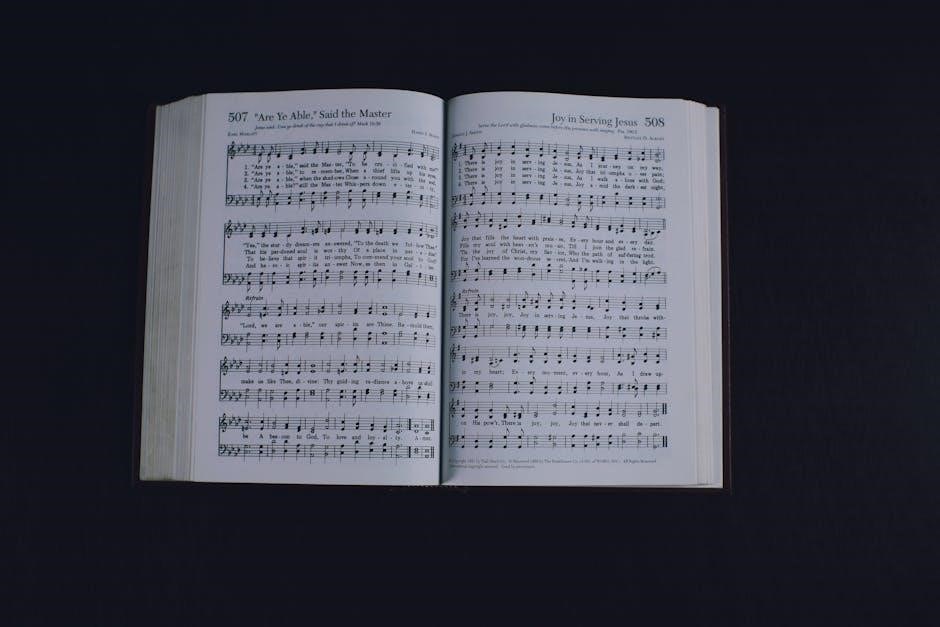
PDF accessibility allows for convenient, offline engagement with the text, facilitating focused reading and annotation. The Gospel’s distinctive style, characterized by symbolic language and extended discourses, benefits from the ability to revisit passages and compare different translations easily provided by digital formats.
Researchers and students will find PDF versions invaluable for accessing scholarly editions and commentaries, such as those by William Barclay and Brooke Foss Westcott, enhancing their understanding of the historical and theological context. The availability of complete texts, like the New Jerusalem Bible offered through Catholic Online, provides a comprehensive resource for anyone seeking a deeper connection with this pivotal biblical book.
Historical Context of John’s Writing
Understanding the historical backdrop of John’s Gospel is crucial for interpreting its message, and PDF resources greatly aid this process. Scholars generally place the writing of John’s Gospel sometime between 85-95 AD, making it the last of the four Gospels to be composed. This later date suggests a different set of circumstances and a distinct audience compared to the earlier synoptic accounts.
During this period, the early Christian community faced increasing separation from its Jewish roots and growing persecution. The Gospel of John addresses these challenges by emphasizing Jesus’ divinity and presenting Him as the fulfillment of Old Testament prophecies. Accessing PDF commentaries, like Barclay’s, provides insights into these socio-religious tensions.
PDF versions of historical studies alongside the Gospel text itself allow for a layered approach to understanding. The availability of editions like Westcott’s, originally published in 1892, demonstrates the long-standing scholarly interest in contextualizing John’s writing. Digital access facilitates comparative analysis, enriching the reader’s grasp of the era and its influence on the Gospel’s unique perspective.
Authorship and Date of Composition
Determining the authorship of the Gospel of John remains a topic of scholarly debate, and PDF resources offer diverse perspectives on this issue. Traditionally attributed to the Apostle John, many modern scholars suggest a community of disciples associated with him may have been responsible for its final form. PDF commentaries often delve into the internal evidence within the text, analyzing linguistic styles and theological emphases.
Regarding the date of composition, most scholars agree on a timeframe between 85-95 AD, as indicated by archaeological and textual evidence accessible through online PDF archives. This later date distinguishes John from the synoptic Gospels (Matthew, Mark, and Luke). PDF versions of introductory texts provide detailed timelines and arguments supporting this dating.
Digital access to critical editions, such as those available on the Internet Archive, allows researchers to examine the textual history and assess the arguments for and against Johannine authorship. Exploring these resources in PDF format facilitates a comprehensive understanding of the ongoing scholarly conversation surrounding the Gospel’s origins.
Unique Characteristics of John’s Gospel
John’s Gospel distinguishes itself from the synoptics through its distinct literary style and theological focus, readily apparent in PDF analyses. Unlike the other Gospels, John presents a more symbolic and reflective narrative, emphasizing Jesus’s divine identity and relationship with the Father. PDF commentaries highlight the frequent use of “I AM” statements, revealing Jesus’s self-declaration as the Messiah.
The structure of John’s Gospel is also unique, organized around “signs” – miracles presented as revelatory acts demonstrating Jesus’s glory. PDF study guides often break down these signs and their theological implications. Furthermore, John features extended discourses, particularly Jesus’s farewell speeches in chapters 13-17, which are extensively examined in PDF scholarly works.
Accessing PDF versions of comparative Gospel studies allows readers to directly contrast John’s portrayal of Jesus with those of Matthew, Mark, and Luke. Digital resources showcase John’s emphasis on love, light, and eternal life, themes central to its unique theological contribution, making it a compelling subject for PDF-based exploration.

Key Themes in the Gospel of John
Explore central themes like Jesus’s divinity, belief, and eternal life through accessible PDF studies. Discover how signs and miracles reveal these concepts, enriching your understanding via digital resources.
The Divinity of Jesus Christ
Central to John’s Gospel, readily available in PDF format, is the profound declaration of Jesus Christ’s divine nature. Unlike the Synoptic Gospels, John explicitly presents Jesus as God, not merely a son of God. This is powerfully illustrated through “I AM” statements – echoes of God’s self-revelation to Moses in Exodus – which assert Jesus’s eternal existence and inherent divinity.
PDF study resources, like those from Catholic Online and commentaries by Westcott and Barclay, highlight how John meticulously builds a case for Jesus’s deity. Miracles aren’t simply acts of power, but “signs” revealing the glory of God manifested in Jesus. The prologue (John 1:1-18) unequivocally identifies the “Word” as God, who became flesh in Jesus Christ.

Through careful examination of PDF versions, scholars and students can trace how John emphasizes Jesus’s unique relationship with the Father, His pre-existence, and His role in creation. This understanding of Jesus’s divinity is foundational to John’s presentation of salvation and eternal life, making accessible PDF studies invaluable for theological exploration.
Signs and Miracles in John
The Gospel of John, easily accessible in PDF versions, uniquely frames miraculous events not as isolated incidents, but as “signs” (sēmeia) revealing Jesus’s divine identity and purpose. These aren’t merely displays of power, but deliberate acts intended to evoke belief. PDF study aids, including Barclay’s commentary, illuminate this distinction.
John presents seven primary signs: turning water into wine, healing the official’s son, healing the paralytic at Bethesda, feeding the five thousand, walking on water, healing the man born blind, and raising Lazarus. Each sign is followed by extended discourse, explaining its theological significance. Accessing these accounts through PDF formats allows for detailed textual analysis.
PDF resources from the Internet Archive, like Westcott’s edition, provide historical context and interpretative notes, enhancing understanding of the signs’ impact on John’s original audience. The miracles consistently point to Jesus as the Messiah, the Son of God, and the source of eternal life, making PDF study crucial for grasping John’s theological intent.
Belief and Faith as Central Concepts
The Gospel of John, readily available in PDF format, places paramount importance on pistis – often translated as belief or faith – as the essential response to Jesus’s revelation. Unlike other Gospels, John emphasizes not simply acknowledging Jesus’s claims, but a deep, trusting relationship with Him, leading to eternal life. PDF study resources highlight this nuance.
Throughout John’s narrative, belief is presented as a process, growing through encounters with Jesus and understanding His signs. Accessing annotated PDF versions allows readers to trace the development of faith in characters like the Samaritan woman at the well or the royal official. Barclay’s commentary, in PDF form, details these progressions.
PDF editions, such as those found on the Internet Archive, reveal that belief isn’t merely intellectual assent, but a transformative commitment. Westcott’s edition, also in PDF, provides historical context for understanding the cultural implications of faith in the first century. Ultimately, John’s Gospel, through accessible PDFs, demonstrates that genuine faith results in a changed life.

Eternal Life and Salvation
The Gospel of John, easily accessed in PDF versions, profoundly explores the themes of eternal life and salvation, presenting them as gifts received through faith in Jesus Christ. Unlike a focus on earthly rewards, John emphasizes a qualitative change in life now, alongside the promise of future glory. PDF study aids illuminate this distinction.
Through examining PDF commentaries like William Barclay’s, readers discover that eternal life isn’t simply longevity, but a knowing of God the Father through Jesus. The Gospel consistently links belief in Jesus with overcoming spiritual death and receiving everlasting life. Internet Archive’s digitized texts showcase this central tenet.
PDF editions, including Brooke Foss Westcott’s scholarly work, reveal that salvation in John’s Gospel is not earned, but freely offered. It’s a present reality for those who believe, not a future hope contingent on works. Catholic Online’s PDF resources further clarify this grace-based salvation, offering a comprehensive understanding of John’s message.

Accessing the Gospel of John in PDF Format
Find the Gospel of John in PDF format through Catholic Online, the Internet Archive, and detailed commentaries. Download and study Barclay’s and Westcott’s editions easily!
Catholic Online Resources for John PDF
Catholic Online provides a valuable, freely accessible resource for those seeking to study the Gospel of John in PDF format. Their offering includes all 21 chapters of the Gospel, drawn directly from the New Testament within the New Jerusalem Bible translation. This makes it an excellent choice for individuals familiar with, or wishing to explore, this particular translation’s nuanced approach to scripture.
Beyond simply providing the text, Catholic Online enhances the study experience by incorporating a dedicated “Notes” area alongside each chapter. This feature allows users to directly record their personal reflections, insights, and interpretations as they engage with the text. It transforms the PDF from a passive reading experience into an active, interactive study tool. This is particularly beneficial for personal devotion, Bible study groups, or academic research.
The PDF is designed for convenient download and offline access, enabling study without requiring a constant internet connection. This accessibility makes it ideal for travel, quiet contemplation, or use in areas with limited connectivity. Furthermore, the format ensures compatibility across a wide range of devices, including computers, tablets, and smartphones, allowing users to study the Gospel of John wherever and whenever they choose.
Internet Archive Availability of John’s Gospel
The Internet Archive serves as a vast digital library, offering multiple editions of the Gospel of John in PDF format. Users can discover works such as a two-volume set, originally intended “for men and women to know Jesus Christ more fully,” edited and translated by William Barclay. This edition, dating back to 1978, provides a classic commentary alongside the biblical text.

Notably, the Internet Archive also hosts Brooke Foss Westcott’s edition of the Gospel according to St. John, featuring the authorized version with extensive introduction and notes. This edition, originally published in 1892, represents a significant scholarly work, offering detailed historical and textual analysis. Evidence suggests the copyright status allows for free access and distribution.
However, it’s important to note that the availability of specific files can vary. The Archive’s interface indicates that “No suitable files to display here” may occasionally appear, depending on the search criteria or current digitization efforts. Despite this, diligent searching often reveals valuable resources, including scanned copies from institutions like the Claremont School of Theology, dated as recently as 2021.
William Barclay’s Commentary on John (PDF Access)
William Barclay’s comprehensive commentary on the Gospel of John is a highly regarded resource for biblical study, and PDF versions are accessible through platforms like the Internet Archive. Barclay’s work, known for its clarity and insightful explanations, breaks down the text into manageable sections, offering historical context, theological interpretations, and practical applications for modern readers.
The Internet Archive features a two-volume edition of Barclay’s commentary, originally designed to help individuals deepen their understanding of Jesus Christ. This edition, published in 1978, presents a detailed examination of each chapter, exploring the nuances of the Greek text and the cultural background of the Gospel. Researchers and students alike benefit from Barclay’s approachable style and thorough scholarship.
Accessing the PDF allows for convenient offline study and the ability to search for specific themes or verses. While the Archive’s interface may occasionally display “No suitable files to display here,” persistent searching often yields results. This commentary remains a cornerstone for those seeking a deeper engagement with the Gospel of John, providing a wealth of knowledge and spiritual insight.

Brooke Foss Westcott’s Edition (PDF Availability)
Brooke Foss Westcott’s authoritative edition of the Gospel According to John, featuring the authorized version with extensive introduction and notes, is available in PDF format via the Internet Archive. Published in 1892, Westcott’s work represents a significant scholarly achievement, offering a detailed textual analysis and historical-critical interpretation of the Gospel.
The Internet Archive provides access to this valuable resource, allowing users to download and study Westcott’s commentary at their convenience. Evidence reported on the platform indicates a lack of visible copyright notices for the 1892 edition, facilitating its free distribution and study. Westcott’s notes delve into the original Greek text, exploring variations and offering nuanced explanations of key passages.
Researchers and theologians appreciate Westcott’s meticulous scholarship and his commitment to understanding the Gospel within its historical and literary context. The PDF format enables easy searching and annotation, making it an ideal tool for in-depth biblical research. This edition remains a classic resource for anyone seeking a comprehensive understanding of the Gospel of John.

Navigating PDF Versions of John
Explore annotated PDF versions for enhanced study, utilizing PDF readers for efficient navigation. Enjoy convenient printing and offline access, considering file size and compatibility for optimal reading experiences.
Features of Annotated PDF Versions
Annotated PDF versions of the Gospel of John significantly enhance the study experience, offering layers of supplemental information directly integrated with the text. These versions frequently include detailed footnotes, providing historical context, clarifying difficult passages, and exploring the nuances of the original Greek language.
Furthermore, many annotated PDFs feature cross-references to other biblical texts, allowing readers to trace themes and concepts throughout the entirety of Scripture. Commentary from respected theologians and biblical scholars is often incorporated, offering diverse perspectives on the meaning and significance of John’s Gospel.

Interactive features, such as highlighting and note-taking capabilities, are commonly found in these PDFs, enabling personalized study and deeper engagement with the material. Some versions even include maps of the geographical locations mentioned in the Gospel, aiding in visualization and understanding of the narrative’s setting. Ultimately, annotated PDFs transform the Gospel of John from a simple text into a dynamic and comprehensive learning tool.
Using PDF Readers for Study
Modern PDF readers offer a wealth of features ideal for studying the Gospel of John. Utilize the search function to quickly locate specific verses, keywords, or themes within the text. Employ bookmarking tools to save important passages for easy reference during your study sessions.
Adjustable font sizes and display settings enhance readability, catering to individual preferences and visual needs. Many readers allow for highlighting key verses and adding digital notes directly onto the PDF, facilitating active engagement with the text.
Consider utilizing PDF readers with text-to-speech functionality for auditory learning, or those offering split-screen views for comparing different translations simultaneously. Furthermore, cloud-based PDF readers enable access to your study materials across multiple devices, ensuring seamless continuation of your learning journey. Effectively leveraging these tools can significantly deepen your understanding of John’s Gospel.
Printing and Offline Access
Despite the convenience of digital access, printing the Gospel of John PDF remains a valuable study option. This allows for annotation without digital distractions and provides a tactile learning experience. Ensure your printer settings are optimized for double-sided printing to conserve paper, especially with longer texts like the complete Gospel.
Downloading the PDF enables offline access, crucial for study in areas with limited or no internet connectivity – such as during travel or in remote locations. This independence from an internet connection guarantees uninterrupted study sessions.
Before printing, preview the document to confirm formatting and readability. Consider printing specific chapters or sections rather than the entire Gospel to manage paper usage and create a more portable study resource. Having a physical copy alongside your digital version offers a versatile and comprehensive study approach.
PDF Size and Compatibility
The size of a Gospel of John PDF can vary significantly depending on factors like included commentary, formatting, and image resolution. Generally, a text-only version will be relatively small, easily downloadable and storable on most devices. However, PDFs with extensive annotations or high-resolution scans can be considerably larger.
Compatibility is generally excellent, as PDF is a universally supported format. Most computers, tablets, and smartphones have built-in PDF readers or can easily download free reader applications. However, older devices might struggle with very large or complex PDFs.
When downloading, check the file size to ensure it aligns with your device’s storage capacity and internet bandwidth. Utilizing a modern PDF reader will optimize viewing and navigation, even with extensive annotations. Ensure your software is updated for the best experience and security features.